Clinical Science Behind FebriDx®
How FebriDx Works
FebriDx uses a proprietary combination of two host immune response biomarkers — CRP and MxA — to aid clinicians in distinguishing bacterial infection from non-bacterial etiology at the point of care.

CRP (C-Reactive Protein)
CRP is an acute-phase inflammatory protein that rises in response to infection and systemic inflammation. It elevates rapidly within hours of infection and reflects the severity of the inflammatory response, but alone remains non-specific for bacterial infection at lower thresholds.


MxA (Myxovirus Resistance Protein A)
MxA is an innate immune biomarker that elevates specifically in response to acute viral infection. It is not elevated in bacterial infections and demonstrates rapid induction with a prolonged half-life, making it a reliable indicator of viral immune activation.

Individually, CRP and MxA are insufficient to differentiate bacterial from non-bacterial illness.
Together, they provide the clinical sensitivity and specificity needed to support respiratory decision-making.
By combining a marker of systemic inflammation (CRP) with a virus-specific immune marker (MxA), FebriDx delivers actionable insight into the underlying immune response driving acute respiratory illness.

- Sample: Fingerstick capillary whole blood
- Time to result: ~10–15 minutes
- Equipment: No analyzer or external instrumentation
- Result format: Simple visual readout
- Training: Minimal staff training required
- Maintenance: No calibration or ongoing maintenance
- Patient Satisfaction: Objective results support clearer conversations when antibiotics are not indicated.

Negative predictive value reflects the likelihood that a patient truly does not have a bacterial infection when the test result is negative. In practical terms, a high NPV helps clinicians.
- Reduce unnecessary antibiotic prescribing when bacterial infection is unlikely
- Increase confidence in watchful waiting or supportive care
- Align treatment decisions with antibiotic stewardship goals
- Communicate more clearly with patients and families
FebriDx results should always be interpreted in the context of clinical signs, symptoms, and patient history.













How To Use
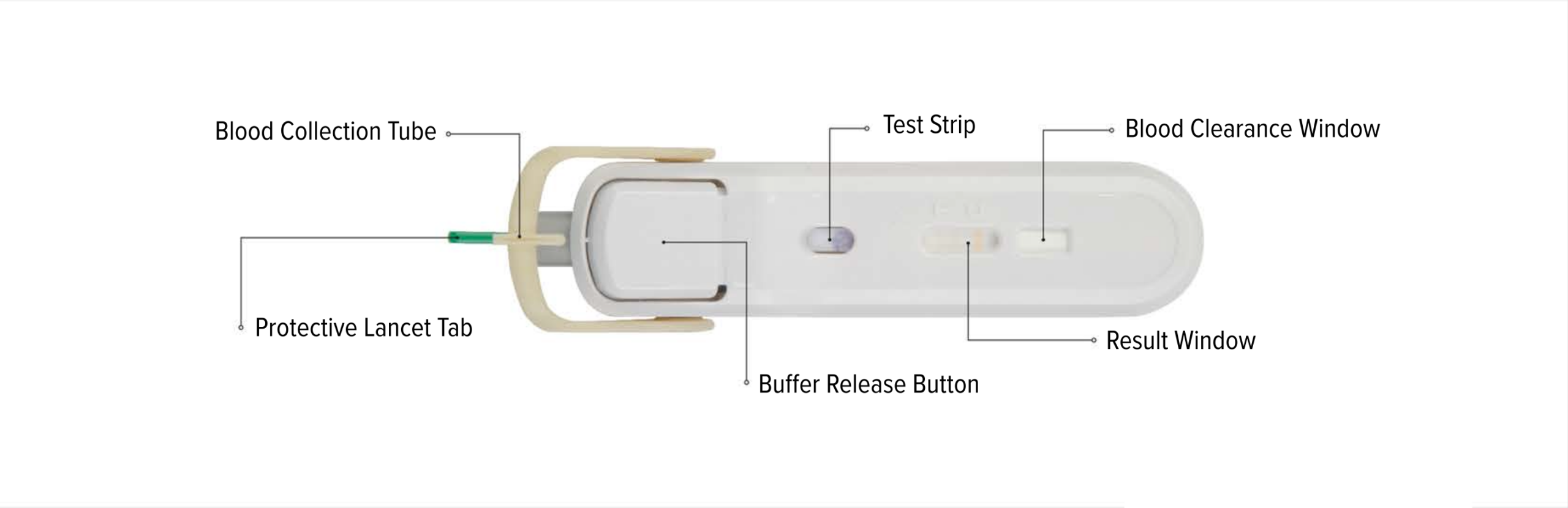
An all-in-one test device
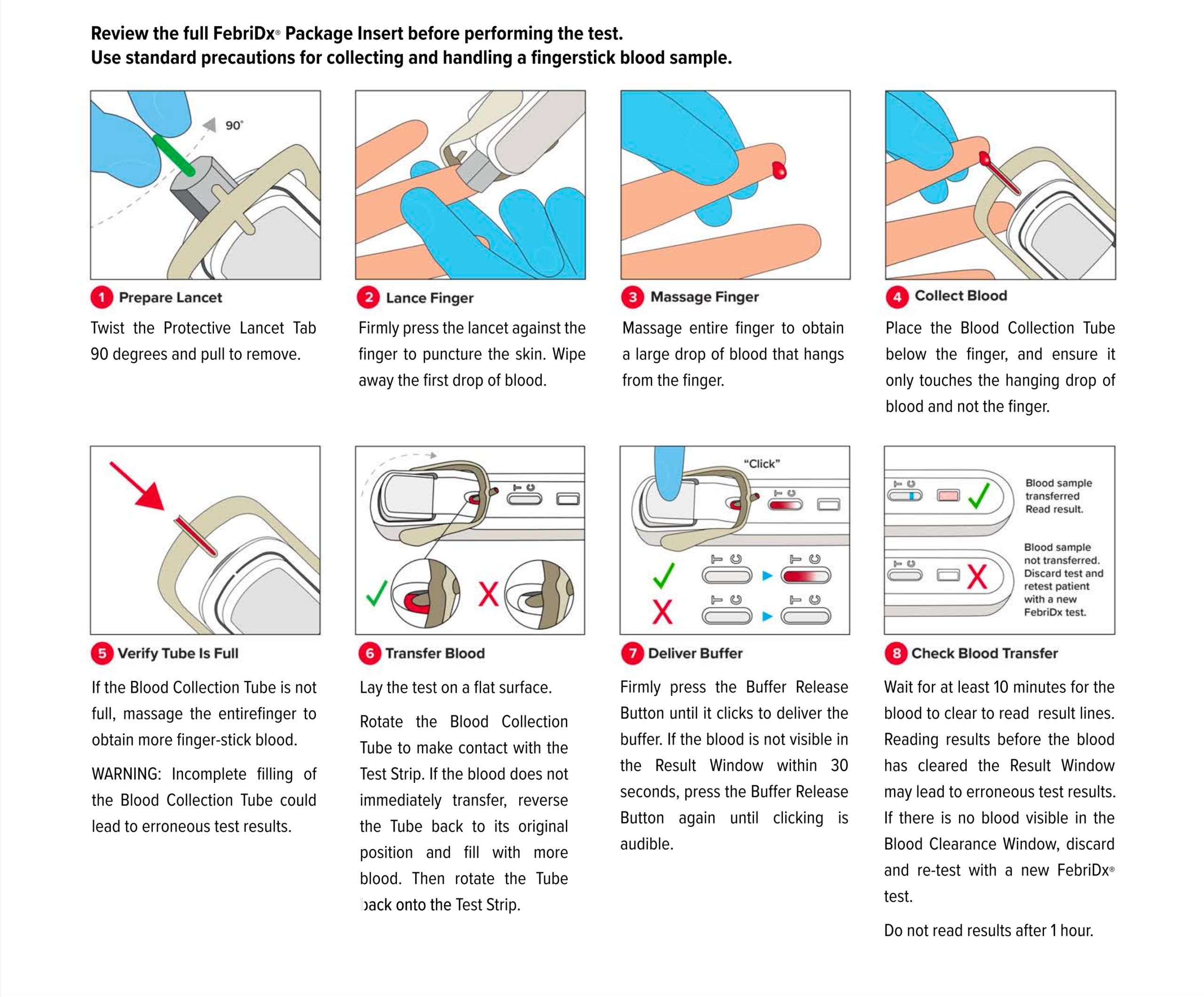
FebriDx instructions for use
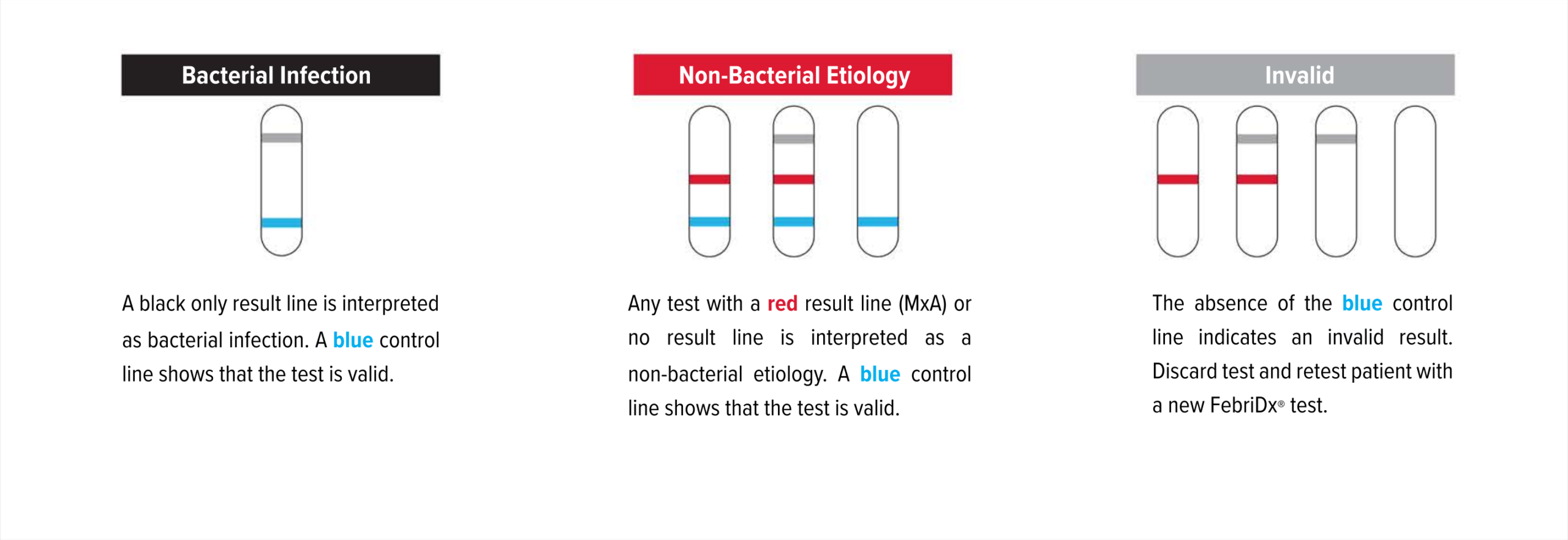
Test Interpretation